Haiqu Raises $11M Seed to Launch Quantum Operating System
Founded by Ukrainian and American entrepreneurs, the New York-based startup operates R&D teams in Ukraine as it builds software to lower the cost of near-term quantum computing.

KYIV, Ukraine – 16 January 2026
Haiqu, a quantum software company, has raised an $11 million seed round to accelerate the launch of its operating system for quantum applications and expand its team, the company said. The round was led by Primary Venture Partners. Haiqu said the funding will support product rollout aimed at reducing the cost and resources needed to run near-term quantum workloads.
Haiqu is developing a hardware-aware software stack that it describes as an operating system for quantum applications. The company said the system is designed to help teams run larger applications on current-generation quantum hardware, which remains constrained by noise and reliability limits. Its focus is on making experimentation on quantum cloud services less expensive and more repeatable at scale.
The company said its approach includes circuit optimization, error shielding and software orchestration that adapts execution to different quantum machines. It also develops algorithmic components such as data-loading subroutines intended to reduce computational overhead. According to the company, the software can run near-term applications at significantly lower computational cost than existing approaches.
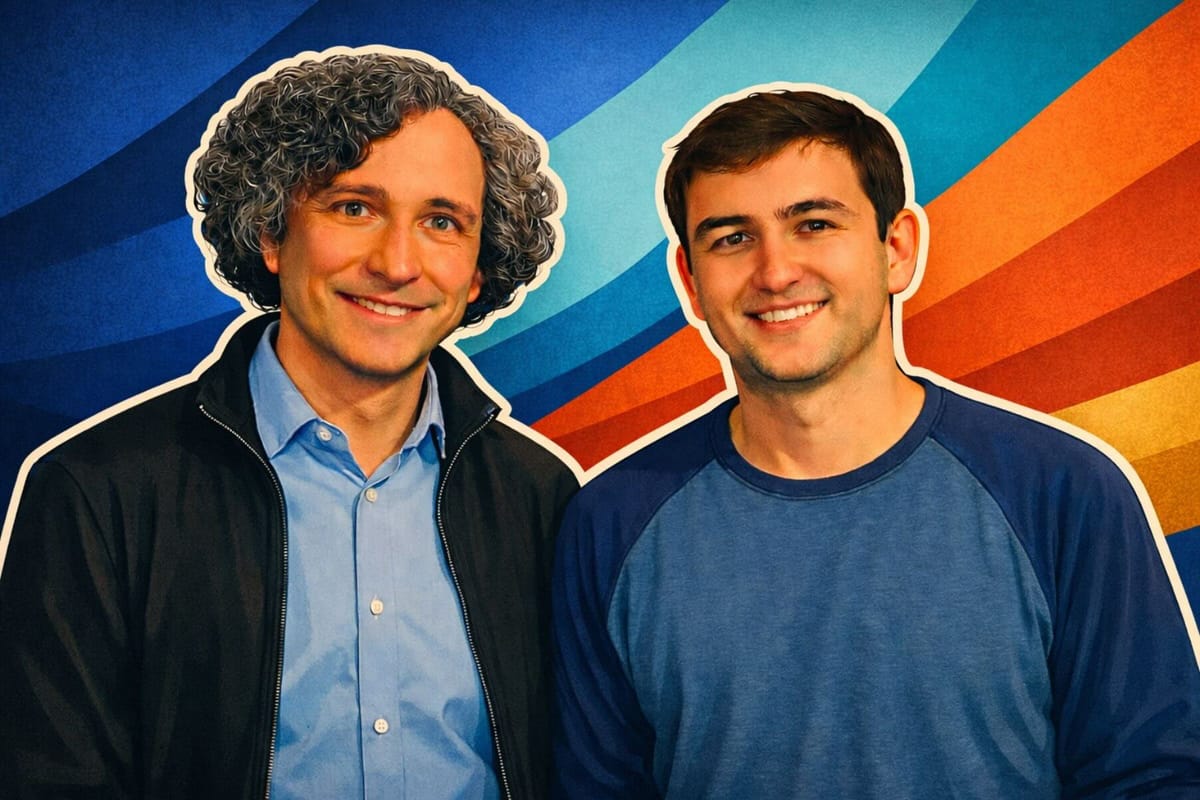
Haiqu was co-founded in 2022 by Richard Givhan, the company’s chief executive officer, and Mykola Maksymenko, its chief technology officer and co-founder. The company said Maksymenko previously worked as a quantum researcher at the Max Planck Society and the Weizmann Institute. Haiqu is based in New York City and operates with a globally distributed team that includes research and engineering staff in Ukraine, where the company conducts core R&D work spanning high-performance numerical methods, AI infrastructure and software development.
The seed round was led by Primary Venture Partners, with participation from Qudit Investments led by John Donovan, Alumni Ventures, Collaborative Fund, Silicon Roundabout Ventures and Angel One Fund, the company said. Returning investors included Toyota Ventures and MaC Venture Capital. Haiqu said it will use the capital to support the operating system launch and team growth, including the recent hire of Antonio Mei, a former principal technical program manager at Microsoft Quantum, as lead product manager. Haiqu raised $4 million in a 2023 pre-seed round from Toyota Ventures, MaC Venture Capital and other investors.
The new funding comes as companies and investors continue to emphasize software approaches intended to make current quantum hardware more practical while the industry works toward more reliable, fault-tolerant systems.
UA Tech Journal previously covered Haiqu’s work on quantum data processing using IBM’s Heron chip, including a milestone in which the company demonstrated the encoding of more than 500 data features into circuits running on 128 qubits for anomaly detection tasks.
Haiqu said it is continuing to validate near-term quantum use cases in areas including finance, healthcare, aviation and life sciences. The company pointed to anomaly detection work it said was affirmed by IBM and Bank of Montreal. Maksymenko has said an IBM experiment that previously required about $50,000 and 10 hours of quantum computer time could be run on Haiqu’s platform in under a minute for about $100. Haiqu is opening a free beta early access program that will allow select users to develop and run applications across different quantum hardware modalities through its platform.
Market researchers estimate the global quantum technology market could reach $100 billion. Primary Venture Partners estimates quantum computing investments reached $11.6 billion in 2024 across public and private companies, compared with $2.4 billion the prior year.
Support UA Tech Journal
UA Tech Journal is an independent, reader-supported publication. Your donation helps us report on Ukraine’s startup ecosystem for a global audience.